

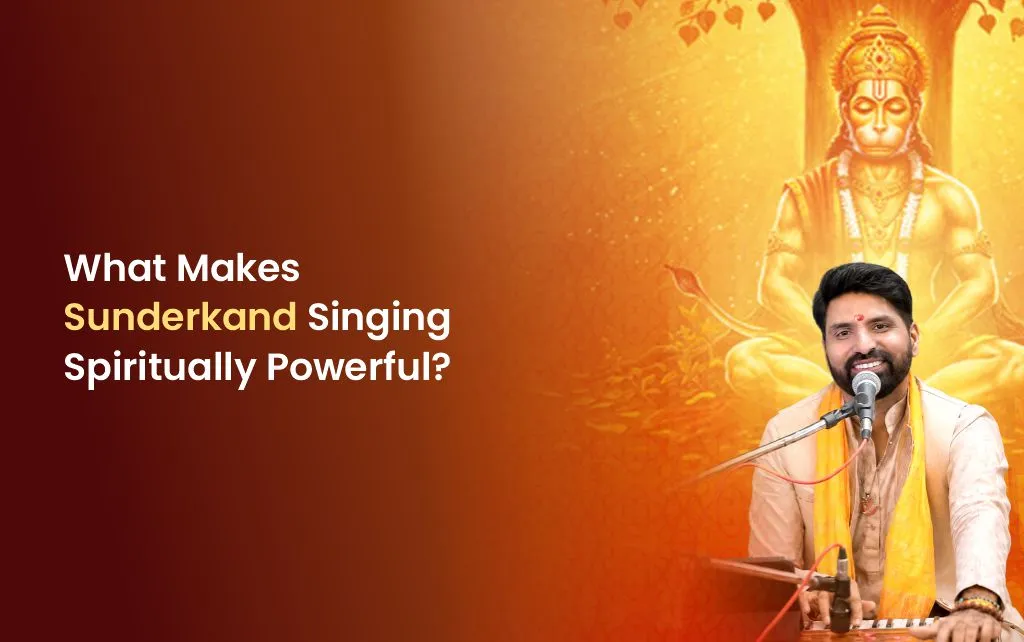
Sunderkand singing holds a special place in Hindu devotional life. When the verses of Sunderkand are sung rather than simply read, many devotees describe the experience as more focused, more emotional, and easier to stay connected with from start to finish. This happens because music adds rhythm, melody, and emotional expression to words that already carry deep devotional meaning within the Ramcharitmanas.
This article explains, in simple terms, why Sunderkand singing can feel spiritually powerful. It looks at the connection between Sunderkand, Lord Hanuman, devotional music, and group participation, and it explains how a well-presented musical Sunderkand session can help create a calm and attentive atmosphere for prayer. The explanations here are based on traditional beliefs and common devotional experiences, not on scientific or medical claims.
Sunderkand is one of the seven Kandas (sections) of the Ramcharitmanas, the epic composed by Goswami Tulsidas. It narrates the journey of Lord Hanuman as he crosses the ocean to Lanka in search of Mother Sita, discovers her in the Ashoka Vatika, delivers Lord Rama’s message, and returns with news of her whereabouts.
Within this section, Hanuman is shown as devoted, courageous, humble, and fully committed to serving Lord Rama. This is one of the main reasons Sunderkand occupies such an important place in Hanuman bhakti. Devotees see in Hanuman’s actions a model of ideal devotion — someone who acts with faith and determination rather than only speaking about it.
Traditionally, devotees read, recite, or listen to Sunderkand for several reasons:
The recurring themes of courage, devotion, service, faith, and perseverance make Sunderkand relevant beyond ritual. These are qualities many people relate to in their own lives, which is part of why the text continues to be read and sung so widely across India.
Sunderkand singing is often described as spiritually powerful because it combines devotional text, melody, and shared participation into a single experience. The words of Tulsidas already carry meaning and emotion. When those words are set to music, several things tend to happen that support focused devotion:
It is worth being clear here: these are common devotional experiences described by practitioners and rooted in cultural tradition, not scientifically proven effects or guaranteed spiritual outcomes. Different devotees may feel this connection to different degrees, and that is a natural part of personal faith.
Music changes the pace, tone, and accessibility of Sunderkand Paath without changing the meaning of the text itself. A few specific elements make a noticeable difference:
A well-chosen melody can make long chaupais (verse units) easier to follow and remember. Many traditional Sunderkand melodies are built for repetition, which helps devotees pick up the tune even if they are hearing it for the first time.
Sunderkand contains repeated structures and refrains. When these are sung with a consistent rhythm, they create a pattern the audience can anticipate and join, rather than a continuous stream of unfamiliar text.
A singer’s vocal delivery — pacing, emphasis, and tone — can highlight the emotional shifts in the story, such as Hanuman’s determination before crossing the ocean or his humility before Lord Rama.
Musical presentation invites the audience to sing along during familiar portions, which is different from a purely individual, silent reading.
Some devotees prefer to listen quietly and absorb the recitation, while others prefer to sing along actively. Both are valid and common approaches; musical Sunderkand simply offers more room for either style within the same session.
A full Sunderkand Paath can take well over an hour. Musical presentation, when paced thoughtfully, can help hold attention through the full session rather than only the opening portion.
The emotional pull of Sunderkand comes largely from its themes, which are woven throughout Hanuman’s journey:
These themes resonate because they mirror situations many people face in ordinary life: facing uncertainty, staying committed to a responsibility, or hoping for a positive outcome after a difficult period. When these themes are carried through singing rather than plain reading, the emotional tone of each section often becomes easier to notice and feel, which is a large part of why devotees describe Sunderkand singing as moving.
Both traditional reading and musical presentation are valid, well-established ways to engage with Sunderkand. Neither format is universally “better” — they simply serve different settings and preferences.
Traditional reading or recitation is often practiced individually or in small family settings. It allows a personal, unhurried pace and is a long-standing home tradition in many households.
Musical presentation is generally suited to group settings, such as community gatherings, temple events, or family functions where many people are present. The addition of instruments, melody, and vocal leadership helps a larger group stay engaged together.
Some practical differences worth noting:
A well-conducted Musical Sunderkand path blends the accuracy of the traditional text with a presentation style designed for groups — helping guests of varying familiarity with the scripture feel included in the recitation rather than left to follow along silently.
A focused devotional atmosphere does not happen automatically. It is usually the result of thoughtful planning around the practical aspects of the session:
None of these elements guarantee a particular spiritual outcome for every individual present. What they do is create conditions where sustained, respectful attention is more likely — which many devotees find supports a more meaningful devotional experience.
An experienced performer plays a practical, guiding role in a live devotional setting that recorded audio cannot replicate. A skilled musical Sunderkand Singer helps the event flow smoothly by:
Pushkar Kandpal, a classically trained devotional performer from Uttarakhand, presents Musical Sunderkand Paath as his primary offering, alongside Ram Bhakti and Hanuman bhajans. According to his website, his musical training traces back to the guru-shishya tradition of Ustad Ghulam Mustafa Khan’s lineage, and his Sunderkand presentations are built around an orchestra-backed format designed for sustained audience engagement. This kind of background reflects the value of choosing a performer who understands both the devotional text and the musical structure needed to hold a group’s attention through a full Sunderkand event.
Sunderkand offers more than a devotional listening experience. The story itself carries values that extend into everyday life:
These values are not exclusive to religious practice. Many devotees find that reflecting on Hanuman’s example offers a useful frame of reference during personal challenges, work responsibilities, or family duties. This connection between scripture and daily life is one reason Sunderkand remains widely read and sung generation after generation, rather than being treated only as a ritual text.
What makes Sunderkand singing spiritually powerful?
Sunderkand singing combines devotional text, melody, and group participation. The rhythm and tune help sustain attention through a long recitation, while the story’s themes of devotion and courage add emotional depth. This combination is why many devotees describe the experience as more engaging than silent reading alone.
Why do people sing Sunderkand instead of simply reading it?
Singing makes the recitation more accessible, especially in group settings. It gives listeners a rhythm to follow, encourages participation through familiar refrains, and can help maintain focus during a longer session compared to silent individual reading.
Is Sunderkand singing suitable for group events?
Yes. Musical Sunderkand is commonly performed at community gatherings, temple functions, and family events precisely because singing invites shared participation. A live singer can guide a large group through the full Paath in a coordinated, organised way.
What is the importance of Hanuman in Sunderkand?
Hanuman is the central figure of Sunderkand. His journey to Lanka, his devotion to Lord Rama, and his courage and humility form the emotional and narrative core of the section, making it foundational to Hanuman bhakti.
What is the difference between Sunderkand Paath and musical Sunderkand?
Sunderkand Paath refers to the traditional recitation or reading of the text, often done individually or in small settings. Musical Sunderkand sets the same verses to melody and rhythm, typically for group settings where audience participation is encouraged.
Can Sunderkand be performed at devotional events?
Yes. Sunderkand is regularly performed at religious functions, satsangs, housewarmings, and other devotional gatherings, often with a singer leading the recitation musically to guide the audience through the programme.
How does music enhance Sunderkand Paath?
Music adds melody, rhythm, and vocal expression to the recitation. This can make longer sessions easier to follow, encourage audience participation, and highlight the emotional tone of different parts of the story.
What should you look for when choosing a Sunderkand singer?
Look for clear vocal delivery, accurate recitation of the text, the ability to maintain rhythm and audience engagement over a long session, and a presentation style that respects the traditional devotional format while remaining accessible to a mixed audience.
Sunderkand singing draws its meaning from the Ramcharitmanas and its emotional force from Hanuman’s devotion, courage, and service. What makes it spiritually powerful, in a grounded sense, is the way music turns a lengthy scriptural recitation into a shared, focused, and emotionally engaging devotional experience. Rhythm holds attention, melody carries emotion, and group participation turns individual listening into collective prayer.
A respectful and well-structured musical Sunderkand presentation honours the traditional text while making it accessible to a wider audience, from devotees who know every verse to guests attending their first Sunderkand event. Performers like Pushkar Kandpal, who bring classical training and a structured, orchestra-backed format to Sunderkand Paath, illustrate how thoughtful musical presentation can support a calm and attentive devotional atmosphere without losing the sanctity of the original text.
If you are planning a devotional gathering and considering a musical Sunderkand presentation, it helps to choose a singer who understands both the scripture and the musical structure needed to guide an audience through the full Paath. For more details on booking a live Sunderkand singing session, visit the Sunderkand and Contact pages on pushkarkandpal.com.
Comments are closed